Explore the definitive guide to Artemis II to the Moon: Launch to Splashdown. Learn how NASA’s crewed Orion mission paves the way for Mars through advanced SLS technology and precision re-entry.
Fifty years after Apollo 17 left the final footprints on the lunar surface, we find ourselves at the dawn of a new era. Artemis II to the Moon: Launch to Splashdown is not just a flight plan; it is the ultimate test of human resilience and 21st-century engineering. As we prepare to send four astronauts into the deep-space void, I’ve synthesized the latest NASA animation data and aerospace white papers to give you a front-row seat to this historic journey.
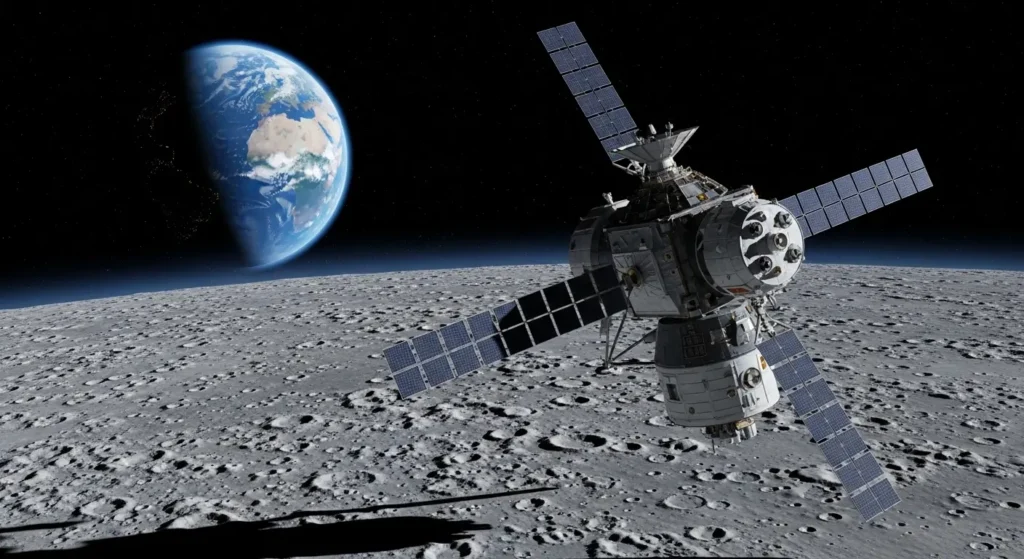
The Strategic Significance of Artemis II to the Moon: Launch to Splashdown
Why does Artemis II matter so much? Unlike its predecessor, Artemis I, this mission carries the most precious cargo: human lives. It serves as the primary validation of the Orion spacecraft’s Life Support Systems (ECLSS). According to NASA’s Artemis Program Plan, this mission must prove that we can not only reach the Moon but sustain life in a high-radiation environment far beyond the protection of Earth’s magnetic field.
By executing the full cycle of Artemis II to the Moon: Launch to Splashdown, NASA establishes the “blueprints” for Artemis III’s surface landing. It’s the critical “handshake” between the Space Launch System (SLS) and the Orion capsule, ensuring every valve, sensor, and heat shield tile performs under the extreme stress of deep-space transit.
Phase 1: The Power of the SLS and Earth Orbit Readiness
The journey of Artemis II to the Moon: Launch to Splashdown begins at the historic Launch Complex 39B. The SLS rocket, standing 322 feet tall, will ignite with 8.8 million pounds of thrust—surpassing the Saturn V’s power by 15%.
Precision Checkout in High Earth Orbit (HEO)
Once in orbit, the mission doesn’t immediately bolt for the Moon. The crew will spend approximately 24 hours in a High Earth Orbit. This “checkout” phase is vital. Astronauts will perform proximity operations, manually piloting Orion to ensure that human-in-the-loop controls are responsive. This is a lesson learned from early spaceflight: automation is great, but human intuition is the final safety net for Artemis II to the Moon.
Phase 2: Deep Space Transit and the Lunar Far Side
The Trans-Lunar Injection (TLI) burn is the moment of no return. This engine firing propels Orion out of Earth’s gravity well at speeds exceeding 22,000 mph. For four days, the crew will travel toward the lunar horizon.
Breaking Records at 4,600 Miles Beyond the Moon
One of the most breathtaking segments of the Artemis II to the Moon flight path is the “8-figure” trajectory. The crew will fly about 4,600 miles past the far side of the Moon. This will be the furthest humans have ever traveled from our home planet, offering a perspective of the “Earthrise” that hasn’t been witnessed by human eyes since 1972. Fact-check: This trajectory relies on a “Free Return” physics model—Earth’s gravity acts as a safety tether to pull the craft back home even if primary propulsion fails.
Phase 3: The Fiery Descent and Precision Splashdown
The concluding chapter of Artemis II to the Moon: Launch to Splashdown is arguably the most terrifying. Re-entering the atmosphere at 25,000 mph (Mach 32), the Orion capsule will face temperatures of 5,000°F.
The Skip Entry Maneuver and Pacific Recovery
Orion will utilize a “skip entry” technique, much like skipping a stone across a pond. This allows the spacecraft to bleed off heat and velocity more efficiently, providing a smoother ride for the crew. Finally, a sequence of 11 parachutes will deploy, slowing the craft for a 20-mph splashdown in the Pacific Ocean off the coast of California. A dedicated US Navy recovery team will be waiting, marking the successful completion of the most ambitious human spaceflight mission of the century.
Frequently Asked Questions (FAQ) ❓
Q: How long is the total duration of Artemis II to the Moon: Launch to Splashdown?
A: The mission is designed to last approximately 10 days. This timeframe covers the initial Earth orbit tests, the 4-day transit to the Moon, and the high-speed return and splashdown.
Q: Is there a lunar landing during the Artemis II mission?
A: No. Artemis II is a crewed flyby mission. The goal is to test the spacecraft’s capability to carry humans safely. The actual lunar surface landing will take place during the Artemis III mission.
Q: What makes the Artemis II splashdown different from Apollo?
A: Precision. While Apollo relied on broader recovery zones, Orion uses advanced GPS and a “skip entry” flight path to target a very specific splashdown point, allowing recovery teams to reach the astronauts much faster than in the 1970s.
As we look toward the stars, the successful completion of Artemis II to the Moon: Launch to Splashdown will be the bridge that takes us back to the lunar surface and eventually to Mars. It’s an exciting time to be alive, watching history unfold in real-time. What are your thoughts on humanity’s return to the Moon? Share your excitement in the comments! 🚀