Does Pandora from ‘Avatar’ actually exist? Discover why astronomers search for exomoons, the latest science on Proxima Centauri, and the future of habitable moon discovery.
Table of Contents
- 1. The Science Behind Avatar’s Pandora
- 2. Why Astronomers Prioritize Exomoons Over Exoplanets
- 3. Proxima Centauri: The Closest Real-World Target
- 4. Challenges in Hunting Habitable Moons
- 5. The Future of Astrobiology: ELT and HWO
- 6. Conclusion: Turning Science Fiction into Reality
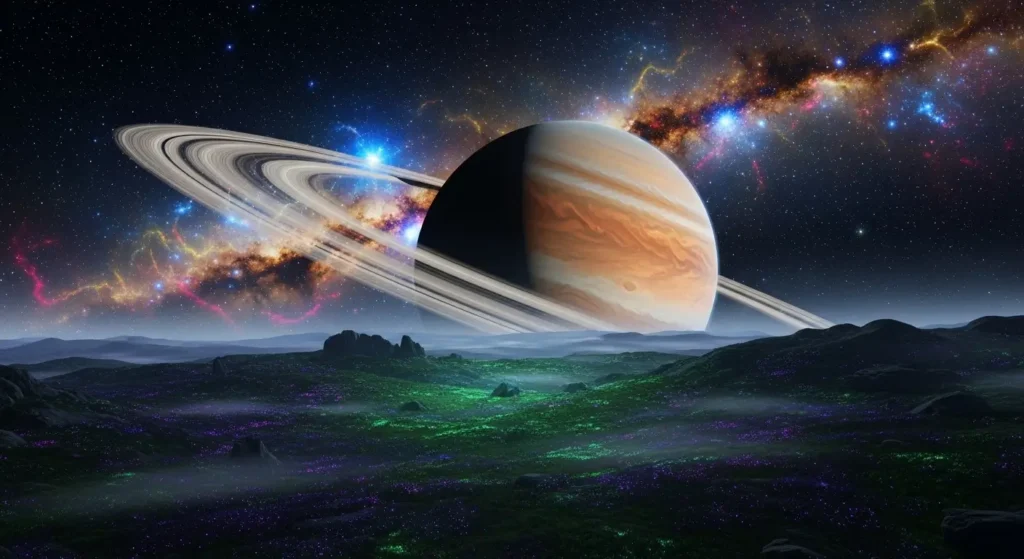
Have you ever looked up at the night sky and wondered if James Cameron’s vision of Pandora—a lush, bioluminescent moon teeming with life—is more than just cinematic magic? In the ‘Avatar’ series, Pandora isn’t a planet; it’s a moon orbiting a massive gas giant named Polyphemus. As an astronomy enthusiast and science communicator, I’ve often found myself diving into the latest peer-reviewed journals to see how close we are to finding a real-life equivalent. Today, we explore the fascinating search for exomoons and why these celestial bodies might be our best bet for finding extraterrestrial life. 😊
Is Pandora Real? Why Exomoons are the New Frontier 🌌
While we have discovered over 5,500 exoplanets to date, the search for exomoons (moons orbiting planets outside our solar system) is just beginning. In our own solar system, planets are outnumbered by moons nearly 20 to 1. If this ratio holds true across the galaxy, the sheer number of potential habitats on moons could dwarf those on planets.
The concept of “habitability” is often limited to the “Goldilocks Zone”—the distance from a star where liquid water can exist. However, moons like Pandora offer a different path. Tidal heating, caused by the gravitational tug-of-war between a moon and its host planet, can generate internal warmth even if the moon is far from its star. This is why moons like Jupiter’s Europa or Saturn’s Enceladus are such high-priority targets for NASA today.
💡 Fact Check: According to a study published in The Astrophysical Journal, giant planets in the habitable zone are likely to host “Earth-sized” moons that could sustain atmospheres and liquid water.
Proxima Centauri: The Real-Life Polyphemus? 🔭
In ‘Avatar’, Pandora orbits a star in the Alpha Centauri system. In reality, Proxima Centauri, a red dwarf and the closest star to our Sun (4.2 light-years away), is the subject of intense scrutiny. We already know of at least two planets there: Proxima b and Proxima c.
Could there be a moon like Pandora around these planets? While Proxima b is a rocky planet, the search continues for larger, gas-giant-style planets further out that could host substantial moons. The proximity of this system makes it the first logical target for future interstellar probes like Breakthrough Starshot.
The Difficulty of Detecting Exomoons: Finding a Needle in a Cosmic Haystack ⚠️
Why haven’t we confirmed a “Pandora” yet? The technical hurdles are immense. Most exoplanets are found via the Transit Method (measuring the dip in star brightness as a planet passes). A moon’s signal is significantly smaller and often gets “lost” in the planet’s shadow.
- Size Constraints: Even the largest moon in our system, Ganymede, is smaller than the planet Mercury.
- Orbital Timing Variation (OTV): Astronomers look for “wobbles” in a planet’s transit time caused by the moon’s gravity.
- Astrometry: This involves measuring the precise position of a star to detect the gravitational influence of a planet-moon system.
The 5-Year Observation Rule
Recent research suggests that to confirm a moon with 20% of Earth’s mass around Proxima Centauri, we would need five years of continuous, high-precision data. We aren’t just looking for a snapshot; we need a high-definition movie of the star’s movement.
Next-Gen Tools for Hunting Habitable Moons 🚀
| Observatory | Key Feature | Pandora Search Potential |
|---|---|---|
| ELT (Extremely Large Telescope) | 39m primary mirror | Direct imaging of nearby exoplanets. |
| HWO (Habitable Worlds Observatory) | Ultra-stable space telescope | Detecting chemical signatures of life (O2, CH4). |
Summary: The Reality of Alien Moons 📝
- The Exomoon Advantage: Moons can be heated by tidal forces, expanding the “Habitable Zone.”
- Proxima Centauri: Our closest neighbor is the most likely candidate for hosting a habitable moon system.
- Technological Leap: Within the next decade, telescopes like the ELT will give us the power to see these tiny worlds.
Frequently Asked Questions ❓
Can a moon really support life like Pandora?
Yes, theoretically. If a moon is large enough to hold an atmosphere and is orbiting a gas giant that provides tidal heating, it could maintain liquid water and complex ecosystems independent of its star’s light.
How many exomoons have been found so far?
We have several strong candidates (like Kepler-1625b I), but none have been 100% confirmed yet due to the extreme difficulty of separating the moon’s light from its host planet.
Why is the Alpha Centauri system so important?
It is a triple-star system only 4.37 light-years away. Its proximity allows for much higher resolution observations compared to stars hundreds of light-years away.
The quest to find Pandora is more than just a search for a movie set; it’s a search for our place in the universe. While we haven’t found Na’vi yet, the math says they—or something like them—could very well be out there. What do you think? Would you travel 4 light-years to visit an alien moon? Let me know in the comments below! 😊